Trade Guide
The Future of Freight: AI, IoT & Blockchain in International Shipping
The future of freight is becoming more predictive, connected, and digital. This blog explains how AI improves decision-making, IoT expands r...
Growing import businesses often lose time and money through manual freight coordination. This blog uses published SME examples to show how digital logistics solutions can improve rate discovery, visibility, customs workflows, and cost control.
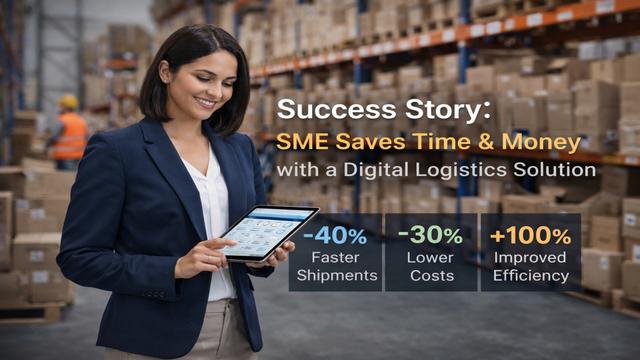
For SMEs, logistics usually becomes painful in the same places: quote discovery takes too long, shipment visibility is weak, customs coordination is reactive, and no one has a clean landed-cost picture until the cargo is already moving. Cogoport’s own 2025 published examples describe a pattern that many growing importers will recognize. One Mumbai-based importer of packaging materials reportedly moved from phone-based negotiations with multiple forwarders to Cogoport’s online platform and then reduced manual coordination time by 90% and overall freight costs by 15% within six months. A Bengaluru-based SME importing electronics from Vietnam reportedly reduced logistics costs by 10% and cut clearance times by two days after moving from a traditional agent to a digital platform. A Delhi-based electronics importer reportedly cut booking time from 48 hours to 20 minutes and reduced freight costs by 12% on regular FCL shipments. These are vendor-published examples, not independent audits, but they are still useful as illustrations of what a digital-shipping workflow can change.
The broader business logic behind those examples is supported elsewhere. DHL says data integration and visibility help reduce delays, improve forecasting, strengthen regulatory compliance, and support more cost-efficient shipping. CBIC’s NTRS 2025 also shows that process readiness matters a lot in India: advance-filed seaport imports moved much faster than late-filed ones. So the published SME stories are credible in structure even though the performance figures themselves come from Cogoport’s own case-style content.
SMEs often feel logistics inefficiency earlier than larger companies because they have less buffer in time, cash flow, and headcount. A delay hurts more when the business does not have a large planning team or extra inventory to absorb it. That is why digital logistics solutions tend to show value first in repetitive, coordination-heavy tasks like rate comparison, booking, tracking, customs-document management, and freight payment timing. DHL’s visibility guidance and Cogoport’s own case examples both point in that direction.
1) Time savings usually start at the quote stage.
The Mumbai case published by Cogoport says the importer moved away from phone-based rate negotiations and gained instant live-rate comparison. The Delhi FCL example says booking time reportedly fell from 48 hours to 20 minutes. Those figures come from vendor-published case content, but they reflect a broader market shift toward live quote discovery and online booking.
2) Savings come from process transparency, not only cheaper freight.
The Mumbai packaging-materials example reported 15% freight-cost savings, while the Bengaluru electronics SME example reported a 10% reduction in logistics costs. Cogoport’s own rate and schedule tools plus its online-booking pages suggest why: digital comparison makes it easier to see multiple options quickly instead of buying off one opaque quote.
3) Better visibility improves planning beyond the shipment itself.
The Bengaluru example says real-time container visibility improved predictability and customer service, and the Delhi example says predictive analytics helped the importer avoid port congestion during a Diwali season surge. DHL’s visibility guidance supports that general principle by linking integrated data to better forecasting, inventory management, and proactive issue resolution.
4) Customs coordination is part of the savings story.
The Bengaluru example specifically mentions automated customs filing and a two-day reduction in clearance time. That is consistent with the broader customs evidence from NTRS 2025, which shows that advance filing and better process discipline materially improve release times. In other words, digital logistics helps not only on the vessel side, but also at the border.
5) SMEs gain because they do not need to build a full internal logistics stack themselves.
Cogoport’s broader platform combines rates, schedules, tracking, customs-linked services, insurance, and Pay Later financing inside one trade workflow. For a small or mid-sized importer, that kind of bundled operating layer matters because the savings are often as much about lower coordination effort as about the ocean rate itself.
The strongest fit is usually an SME with repeat shipments, a narrow internal team, and a meaningful cost of delay. That includes electronics importers, packaging or materials buyers, small industrial distributors, and growing FCL/LCL users who are still coordinating freight in a largely manual way. This conclusion is partly inferential, but it matches the profiles described in Cogoport’s own published examples.
Use this as a quick test:
These are the common mistakes SMEs make before switching:
Cogoport is relevant here because its platform matches the exact pressure points that show up in the SME examples it has published. It provides instant freight-rate comparison, live schedules, online booking, tracking and visibility, customs-linked support, and door-to-door coordination from one platform. CogoAI reduces pre-booking friction by helping users check lanes, documents, and schedules quickly, while Cogo Assured adds fixed pricing and assured fulfillment for businesses that need more predictable execution. Pay Later is especially useful for SMEs because it allows freight and logistics bills to be deferred, which helps protect working capital when shipment frequency or rate volatility increases. Put together, that means the platform is not only helping SMEs find a rate faster; it is helping them reduce manual workload, improve planning, and keep freight decisions closer to cash-flow discipline. That is usually where the real operational savings come from.
The most credible lesson from these SME examples is not the exact percentage saved. It is the pattern behind the savings. When a growing importer moves rate discovery, visibility, customs coordination, and shipment follow-up into a cleaner digital workflow, time loss and cost leakage usually become easier to control. That is why digital logistics solutions often create value for SMEs earlier than they expect.
The future of freight is becoming more predictive, connected, and digital. This blog explains how AI improves decision-making, IoT expands r...

Learn how online freight marketplaces help importers get instant container-shipping quotes, compare options quickly, and improve booking dec...

Customs clearance moves faster when importers use digital tools for filing, tracking, duty calculation, and document control. This blog expl...