
Trade Guide
The Future of Freight: AI, IoT & Blockchain in International Shipping
The future of freight is becoming more predictive, connected, and digital. This blog explains how AI improves decision-making, IoT expands r...
A practical guide to how customs duties, FTAs, and trade policies affect landed cost and sourcing strategies. Learn how tariff changes and trade agreements influence import pricing and logistics decisions.
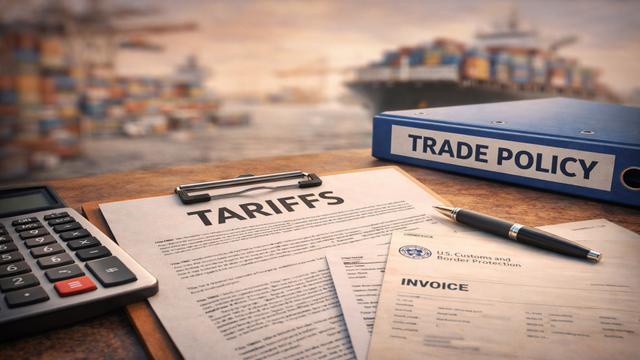
For importers, trade policy now changes landed cost in more than one way. It can alter the basic customs duty on a product, create a preferential duty path under an FTA, delay a tariff benefit until ratification, or raise costs through anti-dumping action on a specific input.
India’s Union Budget 2026-27 says its customs proposals aim to simplify the tariff structure, support domestic manufacturing, promote export competitiveness, and correct duty inversion. The same package includes BCD exemptions or extensions for capital goods used in lithium-ion cell manufacturing, battery energy storage systems, solar glass inputs, nuclear power projects, critical minerals processing, aircraft parts, and specified microwave-oven parts, while also removing some long-running exemptions where domestic production exists or imports are negligible.
At the same time, India’s FTA map is moving quickly. The India–EFTA TEPA entered into force on 1 October 2025. India’s Ministry of Commerce said in February 2026 that India and the EU had concluded the India–EU FTA on 27 January 2026, but that it still had to be signed after mandatory procedures. The same parliamentary reply said India had signed a CETA with the UK on 24 July 2025 and a CEPA with Oman on 18 December 2025, both under ratification by partner countries, and that India is also reviewing existing agreements with ASEAN and South Korea.
That is why the better importer question is not just, “Did duty go up or down?” The better question is, “Which policy change is effective now, which one is pending, and which one applies only if my origin and documentation are correct?”
Trade-policy changes do not always show up as dramatic headlines, but they can still change the economics of an import lane.
A budget notification can reduce cost on one component while restoring a higher tariff on another. An FTA can lower duty only if the shipment qualifies under rules of origin. A trade-remedy case can push up input cost even if the base MFN tariff has not changed. Reuters reported in March 2026 that India had launched or advanced anti-dumping action on Chinese chemical imports such as ethyl chloroformate and DASDA, which shows how quickly input costs can move for downstream users.
The first channel is the most obvious one: India’s own customs structure.
The 2026 budget customs release says the new package is designed to simplify tariffs while supporting domestic manufacturing. It extends or grants BCD relief for energy-transition and strategic-manufacturing inputs such as lithium-ion cell production equipment, solar-glass raw material, critical-mineral processing equipment, nuclear-power imports, aviation parts, and certain consumer-electronics components. It also says some exemptions are being removed where goods are now made in India or imports are negligible. That means importers need to recheck HS-code duty assumptions rather than recycling old landed-cost models.
The second channel is preferential market access.
The India–EFTA TEPA is already in force from 1 October 2025, and the PIB says EFTA’s market-access offer under TEPA covers 100% of non-agri products plus tariff concessions on processed agricultural products. By contrast, India’s February 2026 parliamentary answer says the India–EU FTA is concluded but still awaiting signature and mandatory procedures, while the UK and Oman agreements are under ratification. For importers, that means headline deal news and effective duty relief are not the same date.
The third channel is competitive pricing, not just your own import bill.
The EU’s official factsheet says the concluded EU–India FTA will cut over 90% of tariffs, and its chapter summary says India will eliminate tariffs on 86% of tariff lines and 93% of trade value, bringing total liberalisation coverage to 96.6% on India’s side. The UK’s official impact assessment says Indian tariff cuts under the UK–India deal are estimated to reduce duties on UK exports by around £400 million as soon as the agreement comes into force, rising to about £900 million after 10 years. Even if your own sourcing country does not change, competitor imports might become cheaper once ratified FTAs begin to operate.
The fourth channel is review and upgrade.
India’s February 2026 parliamentary reply says the government is reviewing agreements with ASEAN and South Korea. Korea’s Ministry of Trade then said on 16 March 2026 that India and Korea discussed resuming and accelerating CEPA upgrade talks, noting the need to expand liberalisation as India signs new FTAs and opens its market further. For importers, that means duty planning cannot stop at “agreement exists.” The real variable is whether the existing agreement is being upgraded, tightened, or operationally reinterpreted.
The fifth channel is trade defence.
DGTR and Reuters updates in March 2026 show India continuing to investigate or recommend anti-dumping measures on selected imported chemicals from China and other origins. These cases are narrow compared with an FTA, but they can be much more immediate for the importers who use those inputs in pharma, agrochemicals, dyes, or industrial processing. In practice, some of the most commercially important tariff changes are the ones buried in product-specific trade-remedy action.
The importers most exposed to policy updates are the ones buying intermediate goods, capital goods, or regulated inputs where a small duty or remedy change materially changes landed cost.
That usually includes electronics and components buyers, chemicals and pharma-linked importers, energy-transition and critical-mineral supply chains, aviation-linked importers, and businesses that source from countries newly covered by FTAs or CEPA/CECA reviews. This follows directly from the sectors highlighted in the 2026 budget and current trade-agreement pipeline.
Use this before your next PO or customs filing:
Recheck current BCD and exemption status by HS code.
Separate “effective now” changes from “signed but not in force” changes.
Validate whether your shipment can actually claim preferential origin.
Review supplier declarations and origin documentation early.
Watch DGTR activity on your input categories.
Rebuild landed-cost sheets after Budget 2026 changes.
Review whether ASEAN, Korea, EU, UK, or EFTA changes affect your lane.
Check if a competitor could gain duty advantage before you do.
Align procurement, customs, and finance teams before quoting customers.
Avoid booking solely on old duty assumptions.
These are the common importer mistakes in a fast-moving policy environment:
treating every announced deal as immediately effective
assuming an FTA automatically lowers duty without origin compliance
ignoring product-specific anti-dumping exposure
failing to update HS-wise landed-cost sheets after budget changes
reading trade policy only as “export news” instead of import-cost risk
Cogoport’s official pages say importers can access instant freight quotes, rates and schedules, customs-linked logistics services, tracking and visibility, and Pay Later. That matters when a tariff or FTA change forces a quick supplier comparison, a reworked landed-cost calculation, or a shift in corridor economics.
Trade-policy updates affect import cost through four different levers at once: domestic tariffs, preferential trade agreements, ratification timing, and trade-remedy action.
The current policy picture is mixed but clear. India’s 2026 budget has already changed customs economics for selected sectors. EFTA is live. The UK and Oman deals are signed but awaiting full effect. The EU deal is concluded but not yet signed. Existing agreements with ASEAN and Korea are still moving. The importers who separate these layers clearly will make better cost and sourcing decisions than the ones who treat all policy news as the same kind of change.
PIB / Ministry of Finance, “Budget proposals for Customs and Central Excise” (1 Feb 2026). Used for current Budget 2026 customs-direction and BCD exemptions.
India Budget 2026 customs-rate document, dojstru1.pdf. Used for detailed customs-structure changes behind the budget announcements.
PIB / Ministry of Commerce, “India–EFTA TEPA to come into effect on 01 October 2025.” Used for TEPA effective date and market-access scope.
GOV.UK, “UK/India: Comprehensive Economic and Trade Agreement [CS India No.1/2026].” Used for UK treaty presentation to Parliament in January 2026.
GOV.UK, UK-India FTA impact assessment. Used for estimated duty reductions on UK exports to India.
Government of India parliamentary reply, USQ-819 (6 Feb 2026). Used for EU conclusion date, UK/Oman ratification status, New Zealand conclusion, and ASEAN/Korea review status.
EU Commission, “Factsheet – EU-India Free Trade Agreement: Main benefits.” Used for tariff-cut scale and customs-facilitation claims.
EU Commission, “EU-India FTA chapter-by-chapter summary.” Used for India’s 86% tariff-line and 93% trade-value liberalisation figures.
India / Department of Commerce, Trade Agreements page. Used for India’s current official trade-agreement architecture.
Korea MOTIR, “Korea and India Discuss Resuming and Accelerating Korea–India CEPA Upgrade Talks.” Used for the March 2026 CEPA-upgrade signal.
Reuters, “India launches anti-dumping probe into ethyl chloroformate imports from China,” 18 Mar 2026. Used for current trade-remedy action example.
Reuters, “India recommends anti-dumping duty on Chinese chemical used in dye industry,” 19 Mar 2026. Used for product-specific landed-cost risk from trade remedies.
DGTR notification, Arylides / definitive anti-dumping duty documentation. Used for official DGTR process context.
Cogoport, official platform, rates, tracking, and Pay Later pages. Used for current Cogoport product references.
The future of freight is becoming more predictive, connected, and digital. This blog explains how AI improves decision-making, IoT expands r...

Growing import businesses often lose time and money through manual freight coordination. This blog uses published SME examples to show how d...

Learn how online freight marketplaces help importers get instant container-shipping quotes, compare options quickly, and improve booking dec...