
Trade Guide
The Future of Freight: AI, IoT & Blockchain in International Shipping
The future of freight is becoming more predictive, connected, and digital. This blog explains how AI improves decision-making, IoT expands r...
Understand when and why cargo insurance matters for FCL shipments. Learn how to protect your imports from loss, damage, and transit risk.
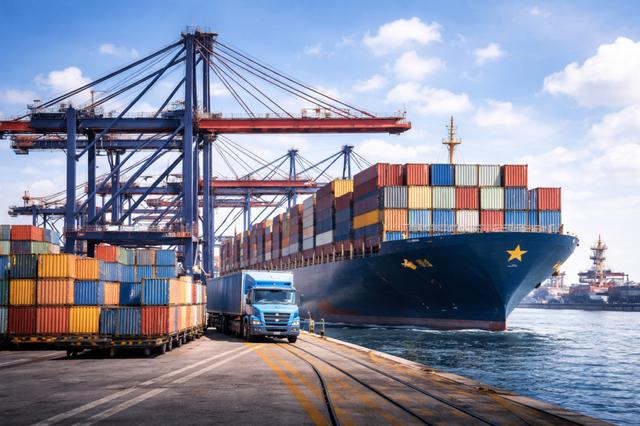
Booking a full container does not mean your cargo is automatically protected.
FCL gives you container exclusivity, but it does not remove exposure to theft, weather, loading damage, water ingress, accidents, General Average, or war-related disruption. Maersk says cargo insurance covers physical loss or damage across sea, road, rail, air, and other transport modes, and that warehouse-to-warehouse cover can protect goods across the full movement. It also lists natural catastrophes, General Average, and war risks among covered exposures under its cargo-insurance offering.
The real issue for FCL shippers is not whether a loss is common on every shipment. It is whether one serious incident would be commercially painful if it happened. TT Club says cargo insurance covers the cargo owner for the full value of the goods, while liability insurance is negligence-based and limited by convention or contract. Maersk separately notes that shipping companies do not insure cargo and that recovering from a carrier can be difficult because fault must be proven and exemptions may apply.
A lot of importers assume FCL is “safer enough” because the container is not shared with other cargo. That is only partly true.
FCL may reduce some consolidation-related handling exposure, but it does not eliminate the main transit risks. TT Club says two thirds of cargo-damage claims are caused or exacerbated by poor packing practices, including bad weight distribution, inadequate securing, and documentary errors. Those are all risks that can exist in an FCL shipment just as easily as anywhere else in the supply chain.
And cargo risk is not only about physical damage. Maersk says General Average is a shared loss principle under which all cargo owners contribute proportionally to extraordinary expenses or sacrifices made to protect the vessel and remaining cargo. That means your goods can be financially exposed even when they are not the damaged goods.
This is the first point to get right.
TT Club says cargo insurance indemnifies the cargo owner for the full value of the goods, while liability insurance protects the freight forwarder and is negligence-based and limited by convention or contract. Maersk says shipping companies do not insure cargo, may only be liable up to certain limits, and claims can be difficult because the cargo owner may need to prove responsibility while also navigating strict claim timelines and exemptions.
So the question is not whether the carrier has some liability. The question is whether that liability is broad, fast, and sufficient enough for your loss. Usually, that is not the same thing as proper cargo insurance.
The second reason is straightforward: FCL containers still move through a rough world.
Maersk says cargo insurance protects against physical loss or damage and can cover natural catastrophes, General Average, and war-related risks. Chubb likewise describes cargo insurance as protecting goods against loss and damage while in transit or storage across the distribution chain. TT Club’s cargo-damage guidance adds that poor packing remains a major cause of claims, which matters directly for FCL shippers because container stuffing quality is their own major control point.
That means “my cargo is in a sealed full container” should not be confused with “my cargo is financially protected.”
The third reason is the one many importers notice only after a major incident.
Maersk explains that when General Average is declared, all cargo owners contribute proportionally to the extraordinary cost of protecting the vessel and remaining cargo. TT Club adds that on modern large container ships there can be thousands of interested parties involved, making the operational and financial impact more significant than many cargo owners expect.
More importantly, insurance affects cargo release. Maersk says GA expenses may require a Letter of Guarantee from the insurer to release cargo, while without cargo insurance the owner may have to arrange their own guarantee. TT Club’s General Average guidance says standard marine cargo policies cover GA contributions and the insurer will usually handle the guarantee process; without insurance, cargo may not be released until suitable security is provided, which can mean a bank guarantee or cash deposit.
The fourth reason is coverage design.
Maersk says cargo insurance ranges from broad “All Risks” to more specific “Named Perils” terms. It also explains that an ICC(A) or “All Risks” policy is the most comprehensive form of cover, but still does not automatically cover every risk; unless specifically included, delay, inherent vice, and some war/strike exposures are excluded. TT Club similarly describes ICC(A) as the most comprehensive form, with ICC(B) and ICC(C) offering narrower perils-based cover.
For FCL importers, that means “insured” is not enough as a buying standard. You need to know what is insured, what is excluded, and whether war-risk, strike, or delay-related exposures need separate attention.
The fifth reason is value discipline.
TT Club’s General Average guidance notes that if cargo is underinsured, the insurer may not place the full guarantee requested, and the cargo owner may have to provide the difference. DHL also warns that undervaluing goods on the commercial invoice can trigger customs holds, additional duty demands, fines, and penalties.
So the value declared for insurance and the value discipline in shipping documents matter far more than many importers assume.
Not every shipment has the same financial exposure.
The businesses that usually need the strongest cargo-insurance discipline are importers of high-value electronics, machinery, regulated goods, fragile products, temperature-sensitive cargo, project cargo, and revenue-critical inventory. These are also the cases where a one-container loss is not just a stock issue; it can become a production delay, a customer penalty, or a working-capital shock.
Use this before your next FCL booking:
Confirm the insured value and whether it matches commercial reality
Check whether the policy is ICC(A), named perils, or something narrower
Verify warehouse-to-warehouse scope, not only the ocean leg
Review exclusions for delay, inherent vice, strikes, and war-related risks
Confirm how General Average guarantees will be handled
Keep stuffing, packing, and sealing records
Preserve invoice, packing list, photos, and loading evidence
Know the first reporting step if damage is discovered
Check whether fragile, reefer, or regulated cargo has special conditions
Make sure Incoterms do not create false assumptions about who arranged insurance
These are the common FCL insurance mistakes:
assuming the carrier automatically insures the cargo
buying based only on the lowest premium
ignoring exclusions because the policy says “all risks”
underdeclaring shipment value
overlooking General Average implications
relying on insurance while packing the container poorly
waiting until after a shipment problem to understand the claims process
The pattern is simple: FCL reduces some operational risks, but it does not replace cargo insurance.
This is the kind of decision where logistics and financial protection should not sit in separate silos.
Cogoport’s platform includes instant freight quotes, end-to-end logistics services, tracking and visibility, cargo-insurance access, Cogo Assured, and Pay Later. That matters for importers because insurance decisions are stronger when they are made alongside routing, booking, cargo visibility, and cash-flow planning rather than as an afterthought.
For FCL shippers, that usually means a better operating model:
freight and protection decisions in one workflow
clearer timing on when cover should attach
better shipment visibility if a claim or incident occurs
more structured execution on urgent or high-value cargo
financing flexibility when premiums and freight costs rise together
Cargo insurance for FCL is not about being pessimistic. It is about being financially realistic.
A full container can still suffer physical damage, delay-related knock-on losses, customs issues, or General Average exposure. Current carrier, insurer, and transport-risk guidance all point in the same direction: carrier liability is limited, cargo insurance is different, and coverage quality matters. The FCL importers who understand when to insure, what to insure, and how claims actually work will usually protect both continuity and cash far better than the ones who assume the container itself is the protection.
Maersk, Cargo Insurance page and FAQs. Used for cargo-insurance scope, warehouse-to-warehouse coverage, ICC(A), General Average, war risks, and claims without proving carrier negligence.
Maersk, “Doesn’t the shipping company have to cover my loss?” Used for the point that carriers do not insure cargo, liability may be limited, and fault may be hard to prove.
TT Club, “Demystifying cargo insurance and liability insurance.” Used for the distinction between cargo insurance and liability insurance, ICC(A/B/C), and the benefit of insurance in General Average.
TT Club, “TT brief: cargo damage.” Used for the point that two thirds of cargo-damage claims are caused or exacerbated by poor packing practices.
Maersk, “What is a General Average?” Used for GA contribution mechanics and insurer guarantee requirements.
TT Club / FIATA / GSF, “Demystifying General Average.” Used for the practical consequences of GA, insurer guarantees, release of cargo, and underinsurance risk.
Chubb, Cargo Insurance page. Used for the role of cargo insurance in covering goods against transit loss and damage across the distribution chain.
DHL, “Commercial Invoice guide for international shipping.” Used for the risks of undervaluation and bad data in customs handling.
Cogoport, platform, FCL, tracking, Cogo Assured, and Pay Later pages. Used for current references to instant quotes, end-to-end logistics, cargo insurance access, visibility, and financing.
The future of freight is becoming more predictive, connected, and digital. This blog explains how AI improves decision-making, IoT expands r...

Growing import businesses often lose time and money through manual freight coordination. This blog uses published SME examples to show how d...

Learn how online freight marketplaces help importers get instant container-shipping quotes, compare options quickly, and improve booking dec...