Trade Guide
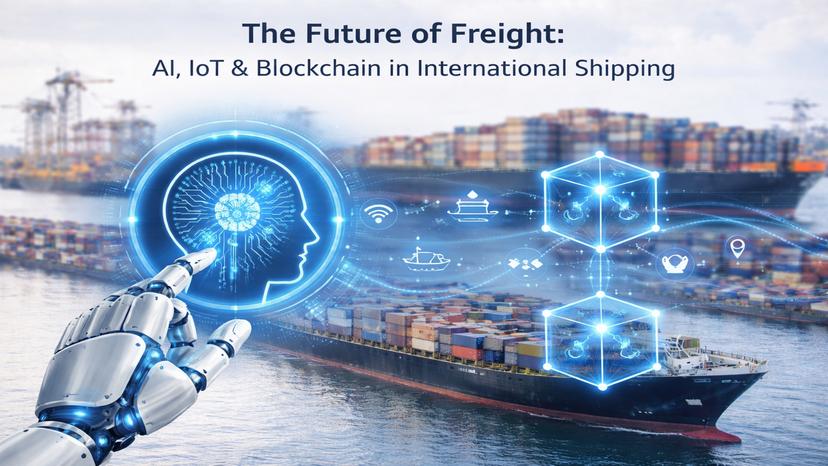
The Future of Freight: AI, IoT & Blockchain in International Shipping
The future of freight is becoming more predictive, connected, and digital. This blog explains how AI improves decision-making, IoT expands r...
A practical guide to how Vietnam and Indonesia are becoming more important sourcing destinations for Indian importers.
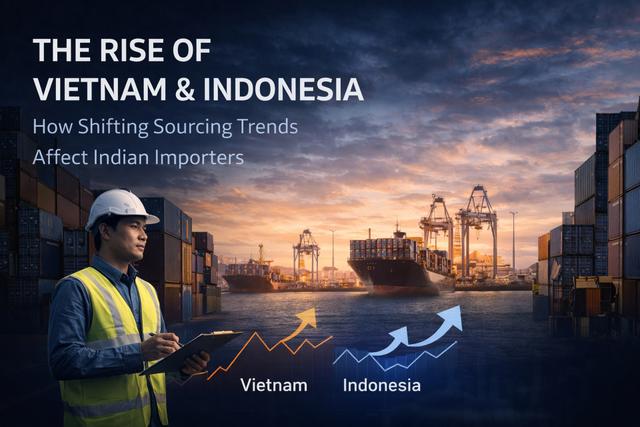
For Indian importers, the rise of Vietnam and Indonesia is not one single sourcing story. It is two different shifts happening at the same time.
OECD says Southeast Asia relies on global supply chains for over 60% of its exports and received a record $229 billion of FDI in 2023, the highest among emerging-market regions. The same OECD note says geopolitical shifts, including U.S.-China trade tensions, are helping push supply-chain diversification toward ASEAN. That broader regional trend is now showing up in very different ways in Vietnam and Indonesia.
Vietnam is becoming more important as an electronics and export-assembly platform. Indonesia is rising more strongly as a resource-processing, metals, and battery-value-chain platform. For Indian importers, that difference matters because it changes not only where alternate suppliers may come from, but also what kind of alternate suppliers are realistic.
A functioning China supply base does not mean diversification pressure disappears.
Reuters reported in December 2025 that Chinese firms were expanding in Vietnam and that Vietnamese imports from China had reached about $168 billion through November, up nearly 30% year on year. Nearly one-third of those imports were electronic parts. That is a useful reminder that “China+1” often shifts assembly geography faster than it removes China from upstream inputs.
For Indian importers, that means Vietnam and Indonesia should not be treated as generic substitutes for China. They should be treated as different sourcing options for different layers of the supply chain.
Vietnam’s rise is strongly tied to trade openness, FDI, and export manufacturing.
OECD’s 2025 survey says Vietnam’s total trade flows rose from 19% of GDP in 1988 to 184% in 2022, making it Asia’s most trade-dependent economy after Singapore. It also says Vietnam is now the 19th largest exporter in the world, that electronics and machinery account for nearly half of exports, and that FDI inflows amounted to 4.8% of GDP over 2015-23. Foreign-owned firms produce 73% of Vietnam’s exports, which shows how important multinational manufacturing platforms are to the country’s rise.
For Indian importers, that makes Vietnam increasingly relevant in telecom, electronics, hardware, and light-industrial sourcing.
Indonesia’s rise is being driven more by upstream industrial strategy.
Reuters reported that Indonesia’s FDI reached 900.9 trillion rupiah, or $53.4 billion, in 2025. The biggest FDI recipient was the base-metals sector at $14.6 billion, followed by mining at $4.7 billion. Reuters added that this rise was linked to Indonesia’s policy of banning nickel-ore exports in 2020 and other minerals in 2023 to move further up the global supply chain. OECD’s cleantech-manufacturing work says Indonesia now attracts 11% of global investment in the battery value chain among emerging economies and hosts 42% of the world’s nickel reserves.
For Indian importers, Indonesia is therefore a more natural conversation in raw materials, processed metals, battery-linked inputs, and resource-intensive supply chains than in electronics assembly.
India’s own import data reflects that difference clearly.
The Embassy of India in Hanoi says India imported $10.33 billion from Vietnam in FY2024-25, up 10.59%, with major imports including electronic equipment, telecom equipment, machinery, iron and steel, chemicals, plastics, and textiles. DGCI&S trade-note search results also point to telecom instruments, computer hardware and peripherals, and consumer electronics as leading import groups from Vietnam. Meanwhile, India’s imports from Indonesia reached $22.78 billion in FY2024-25, and DGCI&S notes list coal, coke and briquettes, vegetable oils, and iron and steel as major import groups, with coal and coke accounting for 36.90% of India’s imports from Indonesia.
That means Vietnam and Indonesia are not interchangeable “alternatives.” They solve different sourcing problems.
This is the most important nuance.
Reuters’ Vietnam reporting shows that Chinese firms are leading investment flows into Vietnam and that Vietnamese imports from China surged nearly 30% through November 2025. Nearly one-third of those imports were electronic parts, often re-exported in finished goods. So an Indian buyer may diversify away from China as a final assembly location and still remain partly exposed to China through components upstream.
That is why country diversification should be tested at the bill-of-materials level, not only at the invoice-origin level.
The last reason these shifts matter is that both investment policy and trade architecture are adapting.
UNCTAD says Vietnam introduced a special investment procedure for selected high-tech and strategic projects effective 15 January 2025, cutting investment-registration timelines to 15 days from a previous 6 to 9 months. OECD also notes Vietnam’s growing role in photovoltaic manufacturing, where it captured 6% of global FDI. On the Indonesia side, Reuters reported that a lithium-ion battery plant backed by Indonesia Battery Corp and China’s CATL is expected to start operating by the end of 2026 as part of a $6 billion battery project spanning nickel mining, processing, battery manufacturing, and recycling. India’s own trade-agreement pages also show an established India–ASEAN trade architecture, which matters when alternate sourcing corridors are being evaluated.
The importers most likely to benefit from these shifts are the ones whose categories already line up with the new specialization.
That usually means electronics and telecom buyers looking at Vietnam, materials and bulk-input buyers looking at Indonesia, and businesses that want some sourcing diversification without assuming they can fully exit China-linked value chains overnight.
Use this before your next supplier review:
Split diversification plans by product family, not by country trend alone.
Test Vietnam first for electronics, telecom, and assembly-linked categories.
Test Indonesia first for metals, minerals, energy-linked, and battery-adjacent categories.
Check upstream BOM dependence before calling a source “China+1.”
Compare freight, duty, and lead-time impact lane by lane.
Build pilot orders before shifting major volume.
Review whether current trade agreements help the landed-cost case.
Map whether your alternate source still depends on Chinese subcomponents.
Align procurement and logistics teams before changing source country.
Keep current suppliers active until the alternate lane proves repeatable.
These are the common importer mistakes in this trend:
treating Vietnam and Indonesia as generic substitutes for China
assuming assembly relocation removes upstream China exposure
comparing only factory price and ignoring corridor cost
moving volume before quality and repeatability are proven
following regional headlines instead of product-specific logic
This kind of sourcing shift needs freight validation as early as supplier validation.
Cogoport’s official pages say importers can use instant freight quotes, end-to-end logistics services, trade-management tools, shipment tracking, Cogo Assured, and Pay Later. That helps when procurement teams need to test new corridors, compare landed cost faster, and monitor shipments closely while a new supplier base is still being proven.
The rise of Vietnam and Indonesia is real, but it is not the same story in both countries. Vietnam is becoming more relevant as an export-assembly and electronics platform. Indonesia is becoming more relevant as a resource-processing and battery-linked industrial base. For Indian importers, the right response is not to follow the trend in general, but to match each country’s strengths to the right product categories and then test how much upstream China dependence still remains. The importers who do that well will usually build resilience without confusing diversification with simplification.
OECD, “Supply Chains in Southeast Asia: Connectivity and Resilience,” 2025 background note. Used for Southeast Asia’s GSC integration, FDI inflows, and the diversification trend toward ASEAN.
OECD, “OECD Economic Surveys: Viet Nam 2025.” Used for Vietnam’s trade-to-GDP ratio, exporter rank, export composition, foreign-firm role, and FDI intensity.
Reuters, “How China Inc is marching into Vietnam amid US tariffs,” 10 Dec 2025. Used for Chinese investment flows into Vietnam and the surge in Vietnam’s imports from China.
Reuters, “Indonesia FDI growth flat in 2025, eyes pick-up in 2026,” 15 Jan 2026. Used for Indonesia’s FDI total, base-metals concentration, and nickel-policy-driven industrial upgrading.
OECD, “The evolution of cleantech manufacturing,” 2025. Used for Indonesia’s 11% share of global battery-value-chain FDI, its 42% share of world nickel reserves, and Vietnam’s 6% share of PV-related FDI.
Reuters, “Indonesia-China lithium battery plant operational by end-2026, official says,” 29 Jun 2025. Used for CATL-linked battery manufacturing in Indonesia and the wider nickel-to-battery project chain.
UNCTAD, “Viet Nam - Introduces special investment procedure for high-tech and strategic projects,” 15 Jan 2025. Used for Vietnam’s accelerated approval regime for selected high-tech investment.
Ministry of External Affairs, “Brief on India-ASEAN Relations,” 15 Jul 2025. Used for India’s FY2024-25 import values from Vietnam and Indonesia.
Embassy of India, Hanoi, “Trade & Economic Relations.” Used for Vietnam import growth and major categories imported by India.
DGCI&S / country-trade note search results on Vietnam. Used for Vietnam’s electronics, telecom, and computer-hardware import profile into India.
DGCI&S / country-trade note search results on Indonesia. Used for Indonesia’s coal, vegetable-oil, and iron-and-steel import profile into India.
Ministry of Commerce, India-ASEAN trade agreements pages. Used for India’s corridor and trade-agreement context with ASEAN.
Cogoport, official platform, tracking, Cogo Assured, and Pay Later pages. Used for current Cogoport product references in the final section.
The future of freight is becoming more predictive, connected, and digital. This blog explains how AI improves decision-making, IoT expands r...

Growing import businesses often lose time and money through manual freight coordination. This blog uses published SME examples to show how d...

Learn how online freight marketplaces help importers get instant container-shipping quotes, compare options quickly, and improve booking dec...