
Trade Guide
The Future of Freight: AI, IoT & Blockchain in International Shipping
The future of freight is becoming more predictive, connected, and digital. This blog explains how AI improves decision-making, IoT expands r...
A practical guide to selecting the best freight forwarder for full-container shipments based on service quality and shipment control.
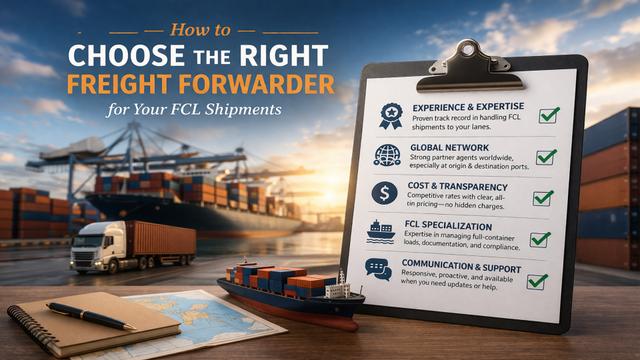
Choosing a freight forwarder for FCL is different from choosing one for a small occasional shipment. A full-container move gives you exclusivity over the box, but it also concentrates operational responsibility: one missed filing, one unclear surcharge, one weak milestone update, or one poor handover can affect the whole shipment rather than just part of it. Cogoport’s FCL page positions FCL inside a broader end-to-end workflow covering quotes, global shipping, customs clearance, and other services, while its FCL guide says FCL provides faster transit and better security than shared LCL in many cases. That makes the forwarder decision much more than a rate-buying exercise.
India-side customs timing reinforces the same point. CBIC’s National Time Release Study 2025 says average seaport import release time was 79:04 hours, while advance-filed Bills of Entry averaged 71:23 hours and late-filed ones averaged 158:59 hours. That gap matters because the right forwarder should help you protect not only the ocean move, but also the documentation and release discipline that turns arrival into usable inventory.
A low base freight rate can still become an expensive shipment if the forwarder is weak on customs coordination, surcharge transparency, or visibility after booking. FIATA defines the forwarder’s role broadly enough to include coordination, handling, and getting goods to destination in the right condition at the most economical cost. In practice, that means the right FCL forwarder is not just the party who can book a container. It is the one who can manage the full movement with fewer avoidable losses in time, control, and cash.
The first thing to check is whether the forwarder is genuinely strong in FCL operations on your actual lanes, not just in general sales coverage. Cogoport’s FCL product page and FCL guide both frame FCL as a dedicated-container workflow with broader logistics execution around it. That matters because FCL buyers usually care about booking reliability, container handling, documentation discipline, and predictable movement more than generic forwarding claims.
The second thing to check is price transparency. Cogo Assured explicitly positions itself around fixed pricing and assured fulfillment, which is useful because FCL costs often become opaque once local charges, amendments, rollovers, and handling extras begin to surface. A strong forwarder should be able to explain not just the ocean base rate, but also the charges, conditions, and commercial assumptions that sit behind the quote.
The third thing to check is customs and documentation strength. Cogoport’s import-document workflow content says digital platforms can validate entries, auto-fill forms, predict document gaps, and track customs-clearance status from start to finish. CBIC’s NTRS 2025 shows why that matters: late filing dramatically worsens release time. A good FCL forwarder should therefore be evaluated on documentation readiness and customs coordination, not only on carrier access.
The fourth thing to check is what happens after the booking is confirmed. Cogoport’s tracking tools, DHL’s visibility guidance, and DCSA’s 2026 roadmap all point to the same trend: the modern expectation is not merely that cargo can be traced, but that exceptions, milestones, and data handoffs are visible without heavy manual chasing. If a forwarder gives you a competitive rate but very little post-booking visibility, the FCL workflow may still feel operationally weak.
The fifth thing to check is whether the forwarder can support the shipment around the ocean leg. Door-to-door execution, cargo insurance, customs support, and freight financing are not always essential, but they become important very quickly when a container is urgent, high-value, or operationally sensitive. Cogoport’s Door-to-Door, Cargo Insurance, and Pay Later pages show why these layers matter in practice: an FCL move is often easier to control when freight, handling, protection, and payment flexibility are not split across too many separate providers.
The businesses that should be most careful here are the ones where one container delay can become a stockout, project slip, or production interruption. That usually includes electronics and component importers, machinery buyers, chemical and pharma-linked importers, and businesses carrying high-value or time-sensitive full-container cargo. This is an inference from the way FCL concentrates shipment value and from the importance of customs and visibility discipline shown in the sources above.
Use this before your next FCL award:
How many FCL shipments do you handle on my lane today?
What is included in the quote and what is conditional?
Who handles customs coordination and document checking?
What visibility do I get after booking?
How are rollovers, delays, or amendments communicated?
Can you support door-to-door, insurance, and finance if needed?
What happens when the shipment goes off plan?
These are the common FCL-forwarder selection mistakes:
choosing on ocean freight alone
asking only for rates and not workflow detail
ignoring documentation and customs capability
accepting weak visibility after booking
separating freight, insurance, and cash-flow decisions too late
discovering service gaps only after cargo is on water
Cogoport is relevant here because it lets importers evaluate FCL forwarding on more than just a sales quote. Its platform combines instant FCL freight quotes and schedules with online booking, shipment tracking, door-to-door execution, customs-linked services, cargo insurance, and Pay Later for deferred freight payments. Cogo Assured adds fixed pricing, assured fulfillment, and priority treatment, which can be especially useful when FCL shipments are high-value or customer-critical. CogoAI further reduces pre-booking friction by helping teams compare rates, check schedules, and ask logistics questions quickly instead of pushing everything into email loops. For importers choosing a freight forwarder, that means they can assess capability across pricing, execution, visibility, and support within one workflow rather than testing each piece separately. That broader view is often what makes the difference between a forwarder who merely books the box and one who can actually control the shipment.
The right freight forwarder for FCL is the one who can protect the shipment across the full chain: rate clarity, booking execution, documentation, visibility, and support when the move becomes difficult. A cheap rate without that operating depth is often not actually the cheaper option. Importers who evaluate forwarders across those five dimensions will usually make better FCL decisions than those who compare only carrier access and base freight.
FIATA, About Freight Forwarding. Used for the core responsibilities of the freight forwarder.
Cogoport, FCL Shipping product page. Used for end-to-end FCL workflow references.
Cogoport, FCL Shipping Explained: Costs, Benefits, and Best Practices (2025). Used for FCL benefits such as faster transit and better security context.
Cogoport, Freight Rates & Schedules. Used for rate and schedule visibility.
Cogoport, Tracking and Visibility. Used for milestone visibility and shipment control.
Cogoport, Door to Door Shipments. Used for integrated freight, customs, trucking, and handling service references.
Cogoport, Cargo Insurance. Used for shipment-protection references.
Cogoport, Pay Later. Used for deferred-payment and freight cash-flow references.
Cogoport, Cogo Assured. Used for fixed pricing, assured fulfillment, and priority treatment.
Cogoport, Essential Import Documents for Customs Clearance. Used for digital documentation and customs-workflow references.
Cogoport, CogoAI. Used for AI-assisted schedule, rate, and shipment-query support.
CBIC / PIB, National Time Release Study 2025. Used for seaport ART, advance filing, and late-filing comparisons.
DCSA, Standards Roadmap 2026. Used for end-to-end data handoff and import-release visibility context.
DHL, Data and Visibility in Freight Forwarding. Used for the business value of integrated visibility.
The future of freight is becoming more predictive, connected, and digital. This blog explains how AI improves decision-making, IoT expands r...

Growing import businesses often lose time and money through manual freight coordination. This blog uses published SME examples to show how d...

Learn how online freight marketplaces help importers get instant container-shipping quotes, compare options quickly, and improve booking dec...