
Trade Guide
The Future of Freight: AI, IoT & Blockchain in International Shipping
The future of freight is becoming more predictive, connected, and digital. This blog explains how AI improves decision-making, IoT expands r...
This beginner-friendly guide explains the full FCL booking process in simple steps. It covers everything from choosing the right container and requesting quotes to preparing documents, clearing customs, and tracking your shipment.
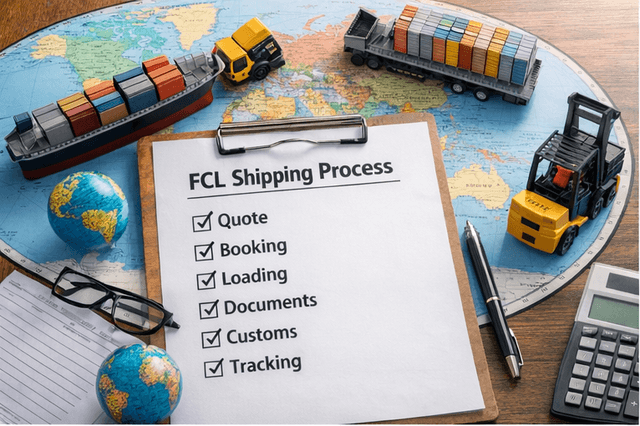
If you are new to international shipping, booking your first FCL shipment can feel overwhelming. There are carriers, container sizes, documentation, customs requirements, cut-off dates, and multiple parties involved. The good news is that once you understand the process, booking an FCL shipment becomes much more manageable.
This guide breaks the process down into simple steps so beginners can understand how FCL shipping works and what to expect from booking to departure.
FCL stands for Full Container Load. It means one shipper books an entire container for their cargo, even if the container is not completely full.
This shipping method is commonly used when:
You have enough goods to fill most or all of a container
You want better control over cargo handling
You want to reduce the risk of damage caused by mixing goods with other shipments
You need faster and more predictable movement than shared container options
In most cases, FCL is preferred for larger shipments, higher-value goods, or cargo that requires more privacy and security.
Before you book, it helps to know the standard options:
20-foot container: Suitable for smaller but heavy shipments
40-foot container: Better for larger-volume cargo
40-foot high cube container: Similar to a 40-foot container but with extra height for more volume
Choosing the right container depends on your cargo dimensions, weight, and packaging method.
The booking process starts with accurate shipment information. If your details are incomplete or incorrect, the quote and booking may not reflect the real shipment requirements.
You should prepare:
Commodity name
Number of cartons, pallets, or packages
Cargo dimensions
Gross weight and net weight
Loading address
Port of loading
Port of discharge
Final delivery location, if needed
Preferred shipping date
Whether the goods are general cargo, hazardous, temperature-sensitive, or oversized
You should also confirm whether your shipment is export-ready. That means the cargo is packed, labeled, and nearly ready to move.
Before booking, make sure you know the agreed trade terms with your buyer or supplier. These terms decide who is responsible for different parts of the shipment, such as pickup, freight charges, insurance, customs clearance, and final delivery.
For example, responsibilities change significantly depending on whether the shipment is arranged under EXW, FOB, CIF, or DDP terms.
Getting this clear early helps prevent confusion over costs and responsibilities later.
As a beginner, it is usually easier to book through a freight forwarder rather than directly with an ocean carrier. A good forwarder can guide you through documentation, scheduling, customs coordination, and local handling.
When choosing a logistics partner, compare:
Freight rates
Transit time
Sailing frequency
Free time at origin and destination
Service coverage
Communication speed
Experience with your cargo type
A strong freight partner will also warn you about potential issues such as port congestion, space shortages, or documentation cut-offs.
Once your shipment details are ready, request a quote. To get an accurate FCL quote, provide complete information from the beginning.
A typical quote may include:
Ocean freight
Origin charges
Destination charges
Documentation fees
Customs clearance fees
Trucking or inland transport
Container handling charges
Seal charges
Insurance, if requested
Always check whether the quote is:
Port to port
Door to port
Port to door
Door to door
Also ask how long the quote remains valid, since freight rates can change.
Do not choose only based on the lowest price. Review the quote in detail to understand what is included and what may be charged later.
Look closely at:
Container type and size
Shipping route
Estimated transit time
Carrier name
Sailing date
Cut-off dates
Included charges
Excluded charges
Payment terms
Demurrage and detention exposure
This step is important because hidden costs often come from unclear terms, not from the freight rate itself.
Once you are satisfied with the quote, confirm the booking with your freight forwarder or carrier.
At this stage, you will usually share:
Shipper details
Consignee details
Notify party details
Cargo details
Container requirement
Pickup plan
Preferred vessel or sailing window
Documentation instructions
After confirmation, the forwarder or carrier will arrange the booking and share the booking details once space is secured.
The booking confirmation is one of the most important documents in the process. It usually includes:
Booking number
Carrier name
Vessel name
Voyage number
Port of loading
Port of discharge
Estimated departure date
Estimated arrival date
Container release or pickup information
Cargo cut-off date
SI cut-off date
VGM cut-off date
Check every detail carefully. If there is any mistake, it is better to correct it immediately than after cargo has moved.
Now it is time to prepare the container for loading.
Depending on the shipping arrangement, one of the following usually happens:
An empty container is picked up from the depot and taken to your warehouse for loading
Your cargo is taken to a container freight station or stuffing point where the container is loaded
During stuffing, make sure:
Cargo is packed securely
Weight is distributed properly
Packages are labeled clearly
Pallets are stable
Cargo is blocked and braced if needed
The container is sealed after loading
Improper stuffing can lead to cargo damage, delays, or penalties.
Documentation is a major part of FCL shipping. Missing or inaccurate paperwork can delay customs clearance or even prevent cargo from loading.
Common documents include:
Commercial invoice
Packing list
Shipping instructions
Bill of lading details
Export declaration, where required
Certificate of origin, if needed
Insurance certificate, if applicable
Product-specific certificates or permits
The exact documents depend on the commodity, destination country, and trade terms.
Shipping instructions tell the carrier or forwarder how the bill of lading should be created.
These instructions usually include:
Shipper and consignee names
Notify party
Cargo description
Number of packages
Weight and measurement
Marks and numbers
Container number, if available
Freight terms
Make sure the information matches your commercial invoice and packing list. Even small mismatches can create problems later.
For most container shipments, the Verified Gross Mass (VGM) must be submitted before the cut-off. This is the confirmed total weight of the packed container.
If VGM is not submitted on time, the container may be rejected from loading.
Work with your warehouse, trucker, or freight partner to ensure the correct weight is recorded and submitted before the deadline.
Before the container can be loaded onto the vessel, export customs clearance may be required. The process depends on the country of export and the type of goods.
Your customs broker or freight forwarder typically handles this step, but you are still responsible for providing accurate documents and declarations.
Delays at this stage are often caused by:
Incorrect HS classification
Mismatched cargo details
Missing export licenses
Incomplete invoices or packing lists
After customs clearance and document submission, the loaded container is moved to the port terminal. This is known as gate-in.
Once the container is accepted at the terminal and all requirements are completed before cut-off, it is scheduled for loading onto the vessel.
This is the point where your FCL booking officially moves from planning into transit.
After the vessel departs, the carrier or forwarder issues the bill of lading. This is the key transport document for the shipment.
The bill of lading usually includes:
Shipper
Consignee
Vessel details
Ports
Cargo description
Container and seal number
Freight terms
Review it carefully before it is finalized. Corrections after issuance may involve delays and amendment charges.
Once the shipment is on the water, monitor:
Vessel departure
Transshipment updates, if any
Estimated arrival date
Destination document requirements
Customs clearance preparation at destination
It is best to prepare destination clearance before the cargo arrives, especially when deadlines and port storage charges are involved.
Here is a quick summary of the full process:
Gather shipment details
Confirm trade terms
Choose a forwarder or carrier
Request and compare quotes
Review charges and cut-offs
Confirm the booking
Receive booking confirmation
Arrange container pickup and stuffing
Prepare shipping documents
Submit shipping instructions
Submit VGM
Complete export customs clearance
Gate in the container at port
Receive the bill of lading
Track shipment until destination arrival
Beginners often face problems not because shipping is too complex, but because small details are missed. Watch out for these common mistakes:
Sharing incorrect cargo weight or dimensions
Booking too late during busy shipping periods
Missing documentation cut-off dates
Confusing port-to-port and door-to-door pricing
Ignoring destination charges
Submitting incomplete shipping instructions
Using weak cargo packing inside the container
Assuming customs documents are handled automatically
Avoiding these mistakes can save both time and money.
Your first FCL shipment will go more smoothly if you follow a few practical habits:
Send complete shipment details from the start
Ask for a full cost breakdown
Double-check every date and cut-off
Keep all documents consistent
Confirm responsibilities under the agreed trade terms
Work with an experienced freight partner
Leave buffer time before vessel departure
Ask questions early instead of correcting mistakes later
The future of freight is becoming more predictive, connected, and digital. This blog explains how AI improves decision-making, IoT expands r...

Growing import businesses often lose time and money through manual freight coordination. This blog uses published SME examples to show how d...

Learn how online freight marketplaces help importers get instant container-shipping quotes, compare options quickly, and improve booking dec...