
Trade Guide
The Future of Freight: AI, IoT & Blockchain in International Shipping
The future of freight is becoming more predictive, connected, and digital. This blog explains how AI improves decision-making, IoT expands r...
A practical outlook on how India’s imports from China and ASEAN countries will evolve in the coming years. Understand sourcing trends, trade patterns, and future supply chain strategies for Indian importers.
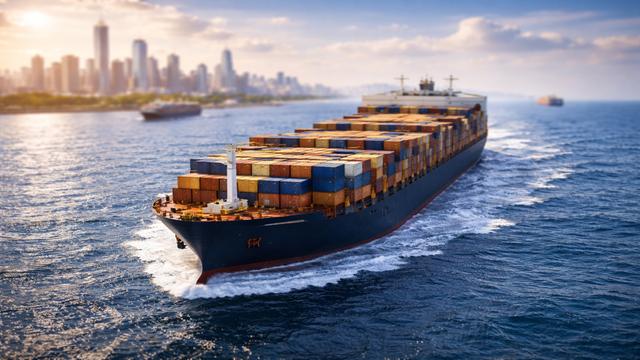
The future of India’s import trade with China and Southeast Asia is unlikely to be a clean switch from one region to another. It looks more like a layered transition: China stays important in critical industrial inputs, while Southeast Asia becomes more important in selected manufacturing, assembly, and commodity corridors.
Official Indian data already shows how strong China’s position remains. A Rajya Sabha reply said China accounted for 15.74% of India’s total imports in FY2024-25, with much higher dependence in categories such as electronics components (37.94%), telecom instruments (43.41%), computer hardware and peripherals (49.46%), industrial machinery (45.30%), and bulk drugs and drug intermediates (74.11%). In March 2026, the Government added that imports from China remain high largely because India still needs capital goods, intermediate goods, and raw materials such as APIs, auto components, electronic parts, and mobile-phone parts.
At the same time, India’s ASEAN links are deepening. The Ministry of External Affairs said India imported $84.16 billion from ASEAN in FY2024-25, including $22.78 billion from Indonesia, $14.27 billion from Thailand, and $10.33 billion from Vietnam. OECD says Southeast Asia now has over 60% of exports integrated into global supply chains and received a record $229 billion in FDI in 2023, which explains why the region is increasingly central to diversification.
That is why the right importer question is no longer, “Will Southeast Asia replace China?” The better question is, “Which part of my China exposure is likely to stay, and which part can move to Vietnam, Indonesia, Thailand, or the wider ASEAN supply base over time?”
A stable China lane does not remove the structural issue: China still sits deep inside many supply chains, even when final assembly moves elsewhere.
Reuters reported in December 2025 that Chinese companies were expanding in Vietnam and that Vietnam’s imports from China had surged to about $168 billion through November 2025, up nearly 30% year on year, with almost one-third made up of electronic parts. That means diversification often changes the geography of assembly faster than it removes upstream China dependence.
The first theme is persistence.
India’s own parliamentary replies say high imports from China are tied to sectors where Indian manufacturing still relies on intermediate goods, capital goods, and raw materials. That means China is likely to remain hard to replace quickly in components, industrial machinery, electronics inputs, and pharma-related materials, even if India diversifies selectively around the edges.
The second theme is selective gain.
OECD’s Southeast Asia supply-chain note says the region’s role in global supply chains is strengthening and that its country strengths are differentiated: Vietnam and Cambodia in electronics, Malaysia in semiconductors, Thailand in automotive products, and Indonesia in EV-related supply chains. So the likely future is not “ASEAN replaces China” but “ASEAN takes more share in the categories where its specialization is already deepening.”
The third theme is specialization.
Vietnam’s India trade profile is increasingly electronics- and telecom-linked, while Indonesia’s role is more resource- and materials-heavy. The Embassy of India in Hanoi says India’s imports from Vietnam include electronic equipment, telecom equipment, machinery, chemicals, plastics, and textiles. By contrast, DGCI&S notes on Indonesia show India’s imports are led by coal, coke and briquettes, vegetable oils, and iron and steel. In other words, the next wave of sourcing change is likely to be basket-specific, not country-generic.
The fourth theme is policy architecture.
India’s February 2026 parliamentary reply said the country is reviewing trade agreements with ASEAN and South Korea, had signed a CETA with the UK, a CEPA with Oman, and concluded an FTA with the EU, while also moving toward a deal with New Zealand. In practical terms, this means duty economics may increasingly influence where importers decide to diversify first, especially if ASEAN and Korea reviews become commercially meaningful for inputs and finished goods.
The fifth theme is volatility.
The WTO’s March 2026 outlook says merchandise trade growth is expected to slow to 1.9% in 2026 from 4.6% in 2025, with downside risk from energy prices, tariffs, and transport disruption. It also says Asia is expected to lead merchandise import growth. That means India’s import trade with China and Southeast Asia can still deepen in strategic categories even in a slower overall trade environment—but route, fuel, and policy risk will likely stay high.
The importers who should watch this shift most closely are the ones whose cost or continuity depends on China-linked inputs today but whose category could plausibly diversify tomorrow.
That includes electronics buyers, industrial machinery importers, battery-adjacent and metals-linked buyers, telecom and hardware distributors, and businesses building China+1 supplier programs. This follows directly from the current country/category pattern in India’s trade data and ASEAN’s evolving specialization.
Use this before your next sourcing roadmap update:
Map which SKUs depend on China for components versus final goods.
Separate “can diversify now” categories from “still China-anchored” categories.
Review Vietnam for electronics and telecom-linked exposure.
Review Indonesia for materials, commodities, and battery-adjacent exposure.
Keep watching ASEAN and Korea FTA review developments.
Compare corridor economics, not just ex-factory cost.
Recheck whether alternate-country suppliers still depend on Chinese inputs.
Track energy and freight volatility as part of sourcing, not after it.
Pilot second-source corridors before shifting large volumes.
Align logistics planning with sourcing diversification, not after it.
These are the common outlook mistakes:
assuming China will disappear quickly from Indian import supply chains
treating ASEAN as one interchangeable sourcing block
reading total trade value without checking category dependence
calling a source “diversified” without checking upstream BOM dependence
ignoring tariff and freight economics while evaluating supplier shifts
Cogoport’s official pages say importers can use instant freight quotes, rates and schedules, tracking and visibility, and Pay Later across global logistics workflows. That matters in a changing China–ASEAN sourcing landscape because corridor comparison, live freight validation, and shipment visibility all become more important when new supplier geographies are being tested.
The future of India’s import trade with China and Southeast Asia is likely to be hybrid.
China will probably remain central in intermediate goods, critical components, and selected industrial categories for longer than many buyers would like. Southeast Asia will likely gain share, but unevenly—more in electronics and assembly in some countries, more in materials and battery-linked chains in others. Policy reviews, FTAs, energy risk, and freight volatility will shape how fast that shift becomes commercial reality. The importers who plan for this as a basket-by-basket transition rather than a one-line geopolitical slogan will usually make better sourcing decisions.
Government of India, Rajya Sabha, “Imports from China,” answered 05 Dec 2025. Used for China’s share in India’s imports and category dependence.
Government of India parliamentary reply, USQ-819 (6 Feb 2026). Used for current trade-agreement status and India’s FTA pipeline.
Ministry of External Affairs, “Brief on India-ASEAN Relations,” 15 Jul 2025. Used for India’s FY2024-25 import values from ASEAN, Indonesia, Thailand, and Vietnam.
OECD, “Supply Chains in Southeast Asia: Connectivity and Resilience.” Used for ASEAN GSC integration and FDI inflows.
OECD, Supply Chain Resilience Review (2025). Used for resilience and trade-dependency framing.
WTO, Global Trade Outlook and Statistics – March 2026. Used for 2026/2027 trade-growth outlook and Asia’s role in import growth.
Reuters, “World trade growth set to slow to 1.9% this year...” 19 Mar 2026. Used for downside-risk framing around energy and transport disruption.
Reuters, “How China Inc is marching into Vietnam amid US tariffs,” 10 Dec 2025. Used for Vietnam’s upstream dependence on Chinese parts and Chinese expansion there.
ASEAN Investment Report 2025. Used for the wider FDI and supply-chain development trend in ASEAN.
Embassy of India, Hanoi, “Trade & Economic Relations.” Used for Vietnam import categories and trade-growth context.
NITI Aayog, Trade Watch (Q1/Q2 FY26). Used for India’s major import-source concentration context.
Korea MOTIR, “Korea and India Discuss Resuming and Accelerating Korea–India CEPA Upgrade Talks.” Used for the Korea review/upgrade context.
Cogoport, official platform, rates, tracking, and Pay Later pages. Used for current Cogoport product references.
The future of freight is becoming more predictive, connected, and digital. This blog explains how AI improves decision-making, IoT expands r...

Growing import businesses often lose time and money through manual freight coordination. This blog uses published SME examples to show how d...

Learn how online freight marketplaces help importers get instant container-shipping quotes, compare options quickly, and improve booking dec...