
Trade Guide
The Future of Freight: AI, IoT & Blockchain in International Shipping
The future of freight is becoming more predictive, connected, and digital. This blog explains how AI improves decision-making, IoT expands r...
Learn how to track your shipment from port to door using end-to-end visibility tools, including ocean tracking, customs updates, and delivery monitoring.
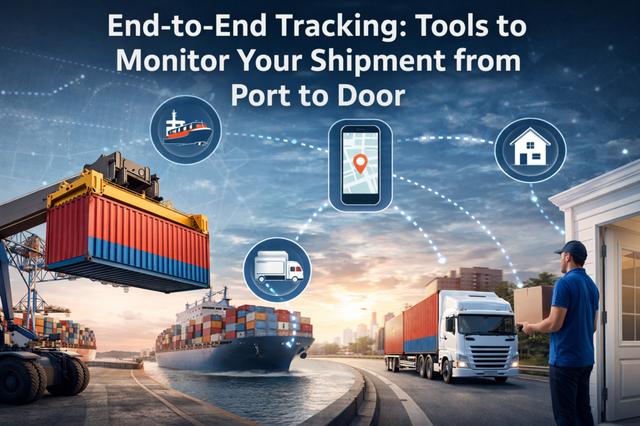
For importers, shipment tracking usually breaks when teams stop at the vessel ETA.
That is too narrow for real-world execution. Cogoport says its tracking tools are built for first-mile to last-mile visibility, with real-time milestone visibility, predictive ETA, and alerts for ETA delays, rollovers, and detention risks. DHL makes the same broader point from a supply-chain angle: when shipment data from multiple sources is integrated properly, companies can reduce delays, optimize routes, manage inventory better, and resolve issues more proactively.
India-side data shows why that matters. CBIC’s National Time Release Study 2025 puts average seaport import release time at 79:04 hours. The same study says seaport imports with advance-filed Bills of Entry averaged 71:23 hours, while late-filed ones averaged 158:59 hours. It also found that across select seaports, DPD cargo averaged 65:33 hours versus 84:03 hours for CFS cargo, with Chennai at 48:17 hours for DPD versus 93:51 hours for CFS. So “vessel arrived” is not the same as “cargo available for delivery.”
A carrier link is useful, but it only covers part of the journey.
Maersk’s tracking tools let customers track ocean containers and cargo shipments by Bill of Lading or container number. That is valuable for mainline movement. But Indian importers also need customs and port-community visibility after discharge. ICEGATE offers Bill of Entry and document-status tracking, and its advisory specifically positions BoE status checks as a way to support smooth customs clearance. Separately, the official Mumbai Port description of PCS 1x says the platform lets users track and trace cargo or container details. In practice, that means one tracking page is rarely enough if you want true port-to-door control.
The first layer is the carrier or container feed.
This is where you confirm the core shipment milestones: gate-in, departure, arrival, and container movement. Cogoport says its tracking product provides real-time milestone visibility across global shipping lines, covering events such as Gate In, Departure, and Arrival. Maersk likewise positions its tracking tools around container, cargo, and shipment lookup by BL or container number. This layer is essential, but it is still only the movement spine of the shipment.
The second layer is early warning.
A shipment can look fine until it suddenly is not. That is why milestone tracking alone is weaker than milestone-plus-exception tracking. Cogoport says users can get alerts on ETA delays, rollovers, and detention risks, and that its system is designed to surface early signals before D&D charges are triggered. Maersk’s Visibility Studio makes a similar case from a multi-carrier perspective: it offers AI-powered tracking, predictive ETAs, real-time disruption monitoring, and at-risk container identification to help minimize demurrage and detention exposure. DHL’s visibility guidance also says integrated data helps companies predict what could go wrong before it happens and act early enough to avoid delays.
The third layer is the port ecosystem.
Once the container has arrived, importers still need to know whether the cargo is actually moving through terminal and delivery processes. Official PCS 1x material says users can track and trace cargo or container details, which is exactly why port-community visibility matters after vessel arrival. CBIC’s NTRS 2025 reinforces the point operationally: DPD moves materially faster than CFS on average across select seaports, so post-arrival handling path can change your usable delivery date even after the vessel leg is complete.
The fourth layer is customs status.
This is where many importers lose visibility. ICEGATE’s services and advisories show that users can track document and Bill of Entry status, and official ICEGATE guidance highlights status and query tracking as part of the platform’s functionality for importers and exporters. That matters because NTRS 2025 shows customs timing still materially affects release: seaport imports averaged 79:04 hours overall, but advance filing materially improved timing and late filing sharply worsened it. If you are not monitoring BoE status, filing timing, and query handling, you are blind to one of the stages most likely to change the warehouse-ready date.
The fifth layer is consolidation.
Once an importer is handling multiple containers, carriers, vendors, customs agents, and internal teams, scattered tracking links become hard to manage. Cogoport says its Global Shipment View puts ongoing shipments in one place, allows bulk upload of shipment details, and lets users share live tracking links with trade partners. DHL describes MySupplyChain as a one-stop portal for order tracking, reporting, document storage, and insights. Maersk’s Logistics Hub makes the same central-dashboard argument, saying it is designed to give users control of their end-to-end supply chain in one dashboard without wasting time chasing information.
The businesses that usually feel weak tracking first are the ones where one shipment delay quickly becomes a customer, production, or cash-flow problem.
That usually includes lean-inventory importers, machinery and project cargo buyers, electronics and component importers, chemical and pharma-linked supply chains, and teams managing multiple shipments across different carriers at once. This is partly a commercial inference, but it follows directly from the combination of customs-release variability, multi-source visibility needs, and the operational value of proactive alerts documented by CBIC, DHL, Cogoport, and Maersk.
Use this before your next arrival cycle:
BL or container-level ocean milestones
gate-in, departure, transshipment, and arrival events
ETA-change and rollover alerts
port or terminal-side movement after discharge
Bill of Entry status and customs queries on ICEGATE
DPD or CFS path after arrival
final delivery coordination with transporter and warehouse
free-day risk before detention or demurrage starts
shared visibility for procurement, operations, finance, and customer teams
This checklist follows directly from the tracking layers described by Cogoport, ICEGATE, PCS 1x, DHL, and Maersk.
These are the common tracking mistakes in import operations:
tracking only vessel arrival and nothing after
relying on manual email follow-ups instead of alert-based visibility
ignoring customs status until the shipment is already late
not watching detention and demurrage exposure early enough
using different links and spreadsheets with no single view
failing to share live status internally with the teams that need to act
The pattern is simple: port-to-door delays usually do not happen because there was no data anywhere. They happen because the data sat in too many places and reached decision-makers too late.
This is exactly the kind of workflow where Cogoport is useful.
Cogoport’s current platform pages say businesses can get instant freight quotes, book end-to-end logistics services including customs clearance, and use tracking tools that provide real-time milestone visibility, live tracking links, predictive ETA, exception alerts, and detention-risk warnings. The platform also positions tracking as a way to avoid last-minute surprises and prevent D&D charges, while its broader trade stack combines booking, logistics execution, and visibility in one place.
For importers, that usually means a few practical advantages:
one place to monitor containers and BLs
earlier warning when a shipment starts slipping
better coordination between ocean movement, customs, and delivery
less dependence on fragmented carrier, port, and spreadsheet updates
better control over costs when delays threaten free days or commitments
End-to-end tracking is not just about knowing where the vessel is.
It is about connecting shipment milestones, port movement, customs status, delivery path, and exception alerts into one usable control system. Current evidence from CBIC, ICEGATE, PCS 1x, DHL, Maersk, and Cogoport points in the same direction: port arrival is only one checkpoint, and the importers who combine carrier tracking, customs visibility, port-community tracking, and shared dashboards will usually respond faster and deliver more reliably than the ones who track only the ocean leg.
Cogoport, Tracking and Visibility product page. Used for first-mile to last-mile visibility, real-time alerts, predictive ETA, global shipment view, and live tracking link features.
Cogoport, Track Your Shipments in One Place, in Real-Time page. Used for milestone visibility, ETA delay alerts, rollover alerts, detention-risk alerts, and multi-source shipment consolidation.
DHL Global Forwarding India, Data and Visibility in Freight Forwarding. Used for the case that integrated visibility reduces delays, improves forecasting, supports route optimization, and enables proactive issue resolution.
DHL Supply Chain India, MySupplyChain. Used for the one-stop portal description covering order tracking, reporting, documents, and insights.
Maersk, Shipment & Container Tracking. Used for container and cargo tracking by BL or container number.
Maersk, Visibility Studio and Logistics Hub. Used for predictive ETAs, multi-carrier visibility, disruption monitoring, D&D risk management, and centralized dashboard functionality.
CBIC / Ministry of Finance, National Time Release Study 2025 and PIB release. Used for seaport import release times, advance-filing vs late-filing timing, and DPD vs CFS comparisons.
ICEGATE, Bill of Entry services, FAQ, and BoE status advisory. Used for document-status and BoE-status tracking functionality and customs-query/status monitoring.
Mumbai Port / PCS 1x, Port Community System page. Used for the statement that PCS 1x users can track and trace cargo or container details.
The future of freight is becoming more predictive, connected, and digital. This blog explains how AI improves decision-making, IoT expands r...

Growing import businesses often lose time and money through manual freight coordination. This blog uses published SME examples to show how d...

Learn how online freight marketplaces help importers get instant container-shipping quotes, compare options quickly, and improve booking dec...