
Trade Guide
The Future of Freight: AI, IoT & Blockchain in International Shipping
The future of freight is becoming more predictive, connected, and digital. This blog explains how AI improves decision-making, IoT expands r...
A practical guide to smooth customs clearance, including advance filing, document checks, duty payment, and approval planning.
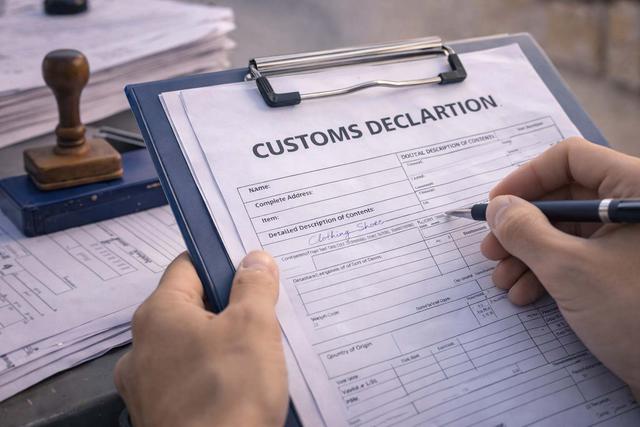
Customs clearance delays usually do not begin at the customs counter. They usually begin earlier, when the importer files late, self-assesses poorly, misses a regulator’s approval, or treats line release, duty payment, and pickup as separate tasks. Under India’s Customs Act, imports are entered through an electronic Bill of Entry, the importer is responsible for the accuracy and completeness of the filing and supporting documents, and clearance for home consumption happens only after duty and other applicable charges are paid and the proper officer is satisfied the goods are not prohibited. The same law also says that if goods are not cleared, warehoused, or transshipped within 30 days after unloading, they may be sold after notice by the custodian with customs permission.
That is why smooth customs clearance is really a pre-arrival discipline problem. The law allows advance filing, and ICEGATE’s own FAQ says customs allows a Bill of Entry to be filed prior to arrival for faster clearance. Section 46 also allows advance filing up to 30 days before expected arrival, while late filing can attract charges. The importers who clear fastest are usually the ones who finish the customs work before the vessel is even alongside.
A shipment can arrive on schedule and still lose days in clearance because digital and regulatory steps were not lined up in advance. CBIC launched eSANCHIT for paperless processing and uploading/searching of supporting documents, while SWIFT was built to streamline the import-export process by connecting importers and partner government agencies through one digital path. ICEGATE’s current notices also show that FSSAI NOC and PQMS NOC workflows are available through SWIFT-linked systems, which makes it harder to justify waiting until arrival to start those approvals.
Section 46 requires the importer to present the Bill of Entry electronically, and the law now expects it before the end of the day preceding the day of arrival, with advance filing allowed up to 30 days prior to expected arrival. ICEGATE separately says prior filing is permitted for faster clearance. That means one of the simplest customs-speed moves is also one of the most underused: file before arrival, not after berthing.
Section 17 makes the importer responsible for self-assessment. Customs may verify the filing on a risk basis, require documents or information, examine or test goods, and re-assess duty if the self-assessment is wrong. If the re-assessment differs and is not accepted, the officer must issue a speaking order. In practical terms, this means HS code, value, exemption claim, origin basis, and supporting documents need to be right before filing, not “fixed later.”
If there is real uncertainty, do not let the shipment drift into a query loop. Section 18 allows provisional assessment when the importer cannot self-assess, where tests or further enquiry are needed, or where required documents/information are still pending. And Section 28H allows advance-ruling applications on classification, valuation, notification applicability, and origin. Used properly, those tools reduce argument after arrival.
Customs law requires the importer to support the Bill of Entry with invoice and other prescribed documents, and the importer must ensure the accuracy, completeness, authenticity, and validity of what is filed. eSANCHIT exists precisely to support this paperless workflow, and ICEGATE’s FAQs say only PDF documents are supported there. The same FAQs also note that groups of IRNs are entered into the Bill of Entry, not DRNs. That makes one habit very important: keep your invoice, packing details, bill of lading, licences, and certificates consistent before upload.
Many customs delays are not really “customs” delays. They are PGA delays. SWIFT is described by ICEGATE as an initiative to streamline import-export processing by enabling importers and partner agencies to work through one interface, and ICEGATE’s current notices specifically point to FSSAI and PQMS NOC routes under SWIFT-linked workflows. If your goods need a regulator, that approval path should start before arrival, not after assessment.
ICEGATE’s Examination Application was introduced as a trade-facilitation measure to bring more transparency and certainty into the goods-examination process. The advisory says importers and authorised customs brokers can schedule, view, and reschedule examinations, while custodians can use the schedule to locate and place goods in the examination area faster. That can save time and cost, especially at ICDs and busy ports where exam slots become an invisible source of delay.
At JNPA, Direct Port Delivery (DPD) lets importers pick containers directly from the terminal instead of routing them through a CFS for the conventional customs-formality sequence. JNPA says this saves time and inventory cost, and its ease-of-doing-business page says DPD can reduce cost by roughly ₹8,000 to ₹20,000 per container while also decongesting port roads. JNPA also notes that the old minimum-volume threshold was removed, so smaller importers can use DPD too.
The operational payoff is real when tracking is strong. Cogoport’s JNPT tracking guide says ICEGATE and PCS 1x now give importers visibility into customs status, duty payments, and clearance stages, and says a large share of JNPT imports are cleared through DPD with faster movement to the importer’s premises. For many importers, cutting the extra CFS leg is one of the cleanest ways to cut red tape.
Section 47 says goods are cleared for home consumption only after the importer has paid the assessed import duty and any applicable charges. It also sets the payment timing for self-assessed Bills of Entry. ICEGATE supports Customs Duty e-payment, and its Electronic Cash Ledger FAQ says the ledger is a mode of online payment alongside internet banking and NEFT/RTGS. So one common importer mistake is easy to avoid: do not wait for “out of charge” before starting trucking, delivery-order, and terminal-pickup planning. These steps need to move together.
Use this before the next vessel touches port:
File the Bill of Entry in advance instead of waiting for arrival day.
Recheck HS code, value, exemption, and origin logic before self-assessment.
Upload supporting documents through eSANCHIT in the right format and map them correctly.
Start PGA/NOC workflows early if the goods are regulated.
If examination is likely or already marked, use ICEGATE’s Examination Application to schedule it.
Align duty payment, line release, truck planning, and gate-out before the file is technically complete.
Where supported and commercially suitable, use DPD to skip avoidable terminal-to-CFS handoffs.
Starting customs work only after the vessel arrives
The law allows advance filing, and late filing can itself create extra cost and time loss.
Treating self-assessment as a clerical step
Section 17 makes the importer responsible for self-assessment, and customs can verify, query, test, and re-assess.
Submitting documents that are technically uploaded but commercially inconsistent
The law requires accuracy, completeness, authenticity, and validity, and eSANCHIT’s workflow depends on correctly uploaded supporting documents.
Leaving PGA approvals until after customs filing
SWIFT exists so importer filings and partner-agency NOCs do not become two disconnected processes.
Waiting passively for examination and gate-out
ICEGATE now gives importers tools to schedule examinations, and DPD plus tracking can reduce unnecessary dwell when used properly.
This is where execution discipline becomes easier with a digital workflow. Cogoport positions itself around end-to-end logistics including customs clearance, and its managed supply-chain page explicitly says it handles port activities, pickup, delivery, customs, and incoming-shipment processes including clearance, gate-out, delivery, and container return. That matters because customs speed is rarely a single-document problem. It is usually a coordination problem.
Cogoport’s JNPT tracking guide adds the visibility layer: ICEGATE and PCS 1x tracking, customs-status checks, duty-payment visibility, and DPD-linked movement updates. For importers trying to avoid demurrage, truck waiting, or missed pickup windows, that visibility is as important as the customs filing itself.
Smooth customs clearance is not about “knowing someone at the port.” It is about reducing the number of things customs has to stop and question. File early, self-assess carefully, keep the document set consistent, start PGA approvals before arrival, schedule examinations when needed, use DPD where it makes sense, and connect duty payment with line release and pickup planning. India’s customs system already gives importers many of the digital tools needed to do this faster.
For Cogoport’s audience, the practical lesson is straightforward: the cheapest day at port is usually the day your container does not wait. Customs clearance gets smoother when freight, documentation, customs, and inland execution are managed as one timeline instead of four separate conversations.
Customs Act, 1962. Used for Sections 17, 18, 46, 47, 48, and 49 on self-assessment, provisional assessment, advance filing of Bill of Entry, clearance after duty payment, sale risk after 30 days, and temporary storage pending clearance.
ICEGATE, “FAQ’s on ICEGATE.” Used for the point that prior filing of Bill of Entry is allowed for faster clearance.
ICEGATE, “e-Sanchit application process guide for IEC users / PGA users.” Used for CBIC’s paperless supporting-document workflow through eSANCHIT.
ICEGATE, “eSANCHIT FAQs.” Used for the point that only PDF documents are supported and for document-upload handling rules.
ICEGATE / SWIFT 2.0. Used for the description of SWIFT as a single-window initiative and for the availability of SWIFT-linked NOC flows such as FSSAI and PQMS.
ICEGATE, “Examination Application - Advisory for Importers, Authorized Custom Brokers.” Used for scheduling, rescheduling, and visibility in customs examinations.
ICEGATE, “Electronic Cash Ledger FAQs,” and ICEGATE portal services. Used for online customs-duty payment modes and e-payment workflow.
JNPA, “Direct Port Delivery.” Used for the basic DPD model of terminal pickup without the conventional CFS transfer.
JNPA, “Ease of Doing Business.” Used for DPD cost savings of roughly ₹8,000–₹20,000 per container and the removal of the old minimum-volume threshold.
ICEGATE / CBIC, provisions on Customs Authority for Advance Rulings. Used for advance-ruling availability on classification, valuation, notification applicability, and origin.
Cogoport, “How to Track Container to JNPT in 2025.” Used for visibility on customs status, duty payments, DPD-linked movement, and dwell-time improvement context.
Cogoport, “Managed Supply Chain / Customs, CFS, Handling,” and Cogoport homepage. Used for Cogoport’s customs-clearance, gate-out, delivery, and end-to-end logistics positioning.
The future of freight is becoming more predictive, connected, and digital. This blog explains how AI improves decision-making, IoT expands r...

Growing import businesses often lose time and money through manual freight coordination. This blog uses published SME examples to show how d...

Learn how online freight marketplaces help importers get instant container-shipping quotes, compare options quickly, and improve booking dec...